
Chairman's Message
November 12, 2026
Colleagues,
It is an honor to begin my term as Chair. As one of the Society’s original divisions, IRD remains central to how nuclear science serves the public. Our members produce and apply isotopes, measure radiation, and use those capabilities in medicine, industry, security, and research.
I thank Erik Wilson for his leadership over the past year and the officers, Executive Committee, Program Committee, and volunteers who sustain the division between meetings. I am especially grateful to Igor Jovanovic for stepping in as Vice Chair and to Greg Downing and Miltos Alamaniotis for continuing as Treasurer and Secretary. I also thank our Executive Committee members for supporting technical sessions, awards, and scholarships.
IRD spans isotope production and utilization; nuclear analysis and activation techniques; radiochemistry and nuclear data; radiation measurement; nuclear security, safeguards, and forensics; and life-science applications of radiation and radioisotopes. Bringing these communities together is one of our greatest strengths. Clinicians, isotope producers, mass spectrometrists, and nonproliferation specialists approach problems differently but benefit from one another’s perspectives.
Demand for medical and industrial isotopes is growing while production infrastructure remains limited. Supplies of molybdenum-99, lutetium-177, actinium-225, cobalt-60, and other key isotopes affect public health, industry, and national security. Meanwhile, global nuclear-energy growth is increasing the importance of safeguards, material accountancy, verification, and forensics. Low-dose radiation science, ALARA practice, and risk communication are also receiving renewed policy attention. IRD members bring valuable experience to these discussions, and I hope we will make that expertise available.
I have four priorities for the coming year:
Strong technical programs and collaboration across ANS. We will continue developing strong IRD sessions at ANS national meetings and supporting MARC as a leading international forum. I would especially like more jointly hosted sessions with other ANS divisions, particularly the Nuclear Nonproliferation Policy Division. IRD contributes expertise in radiation measurement and isotope science; NNPD brings policy and implementation perspectives on safeguards, security, and nonproliferation. Joint programs can connect technical capabilities with the policies they inform. Please bring forward ideas involving NNPD, RPSD, the Young Members Group, or other parts of ANS.
Greater attention to isotope supply and measurement. Production, targetry, separations, quality, and assay deserve a prominent place in ANS programming alongside isotope applications. They are essential to growth across the nuclear field.
More opportunities for students and early-career members. IRD has strong student participation; our next task is helping those members remain active and assume meaningful roles through mentoring, paper review, session chairing, scholarships, awards, and committee service. I encourage established members to include a student or early-career colleague in a review, session, or committee assignment this year.
Active committees, especially two that match the moment. IRD depends on its program, communications, honors and awards, membership, scholarship, and technical committees. Executive Committee membership is not required to contribute. Two technical committees offer especially timely opportunities.
The Isotope Production Committee addresses both supply constraints and growing demand. New therapies and imaging agents are increasing medical radioisotope needs, while industrial and research isotopes remain essential. Reactors, accelerators, and processing facilities are being asked to do more despite aging infrastructure and limited supply-chain redundancy. This committee can lead technical discussions on production routes, targets, processing, quality, and the measurements needed for a trusted supply chain.
The Safeguards, Forensics, and Non-Proliferation Committee is equally timely. More nuclear energy, fuel in transit and storage, isotope production, and geopolitical complexity increase the need for improved measurements, signatures, safeguards, and forensics. IRD expertise in detection, radioanalytical methods, nuclear data, and material characterization can support sessions, collaborations, and a visible ANS contribution.
Please consider joining either committee. Both will benefit from participation across national laboratories, universities, industry, and government, while offering students and early-career members a direct connection between service and current technical challenges.
Please mark November 15–18, 2026, for the ANS Winter Conference & Expo in Phoenix, under the theme Going Critical: Creating a Durable Nuclear Resurgence. IRD also leads the Society’s work to organize and run the International Conference on Methods and Applications of Radioanalytical Chemistry (MARC), which will be held March 26–31, 2028, in Kailua-Kona, and the planning we do now will determine the quality of that meeting.
Please reach out to organize a session, review papers, support the website or newsletter, nominate a colleague for an award, or join a committee. I also welcome candid feedback on how the division can improve. IRD is strongest when members actively shape its work.
I am grateful for your trust and look forward to working with you over the coming year.
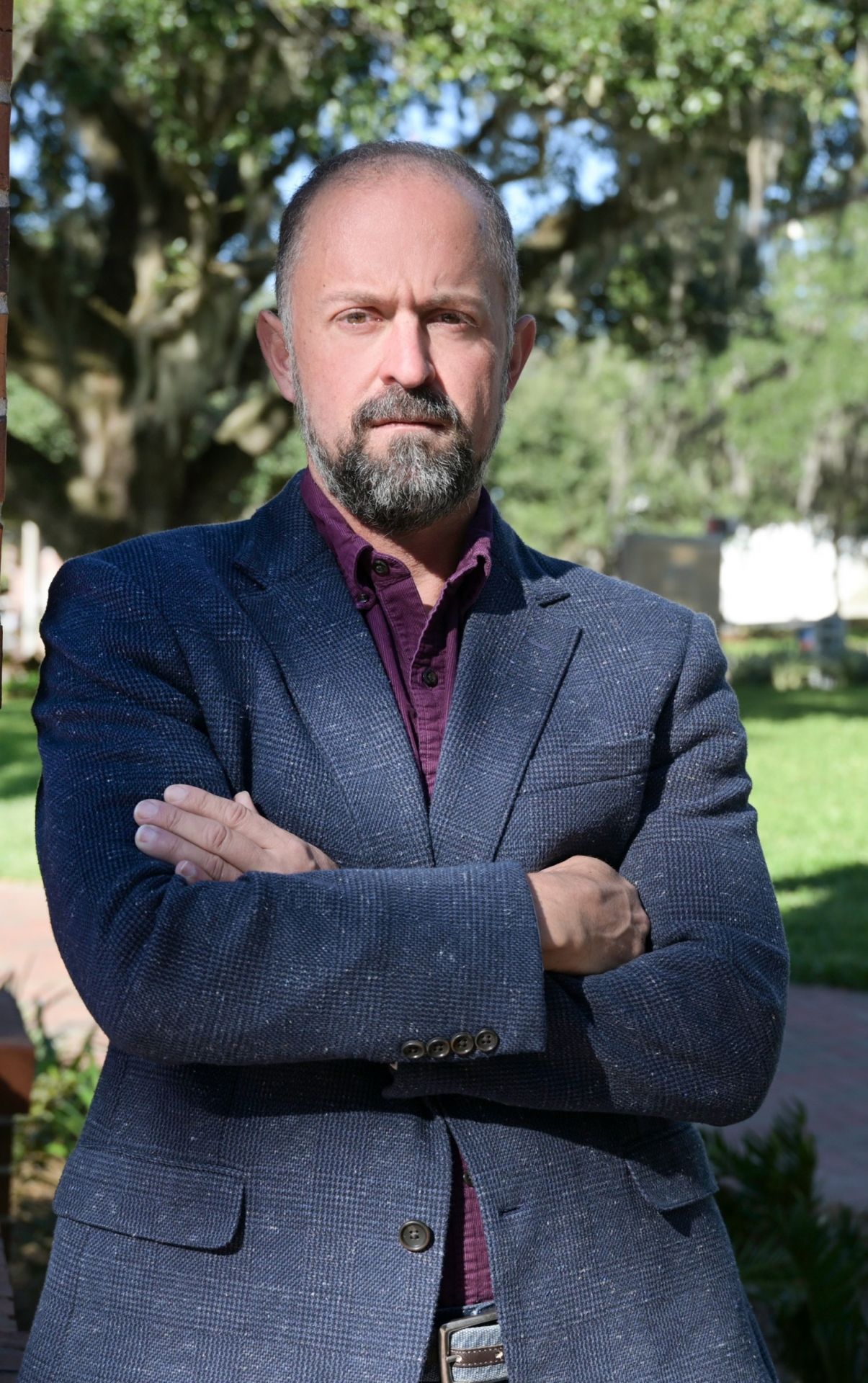
Kyle C. Hartig
Chair, Isotopes and Radiation Division
American Nuclear Society
Last modified November 14, 2026, 10:19pm CST